

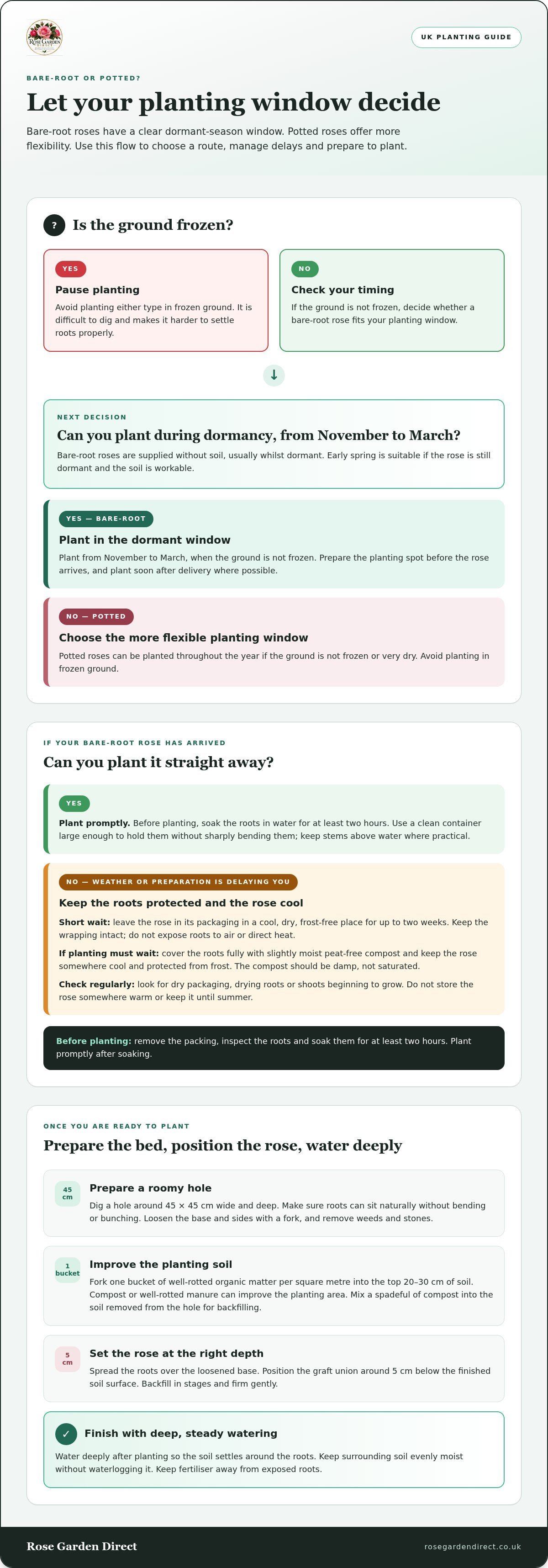
Potted roses offer a wider planting window, but bare-root roses have a clear season. In the UK, plant bare-root roses from November to March, while they’re dormant. Avoid planting when the ground is frozen.
A rose supplied without soil needs no complicated treatment, but timing and care matter: plant during dormancy, keep the roots from drying out and prepare workable soil. Bare-root roses are supplied without soil while dormant, so careful storage is important if you can’t plant them straight away.
This guide explains what bare-root roses are and how they compare with potted roses, helping you choose the right type for your garden. You’ll learn how to store a rose if planting has to wait, prepare the soil and position the plant in its hole. The steps are practical for UK growing conditions.
Key Takeaways
- Plant bare-root roses during their dormant season, from November to March, and wait if the ground is frozen.
- Compare bare-root and potted roses to choose the type that suits your planting plans and timing.
- If planting has to wait, protect the roots from drying out and keep the rose in suitable storage.
- Clear weeds, loosen the soil and prepare a roomy planting hole before setting the rose in place.
How should I prepare the soil before planting?
To plant a bare-root rose, prepare the hole, spread the roots, set the graft union below soil level, backfill and water deeply. Improve the soil with compost and well-rotted organic matter, such as manure, but keep fertiliser away from exposed roots.
-
Prepare the planting hole
Choose a clear spot in the garden and dig a hole around 45 x 45 cm wide and deep. It should also be deep enough for the roots to sit naturally, without bending or bunching. Loosen the base and sides with a fork so roots can spread into the surrounding soil. Remove weeds and stones as you dig.
-
Prepare soil for roses
Fork one bucket of well-rotted organic matter per square metre into the top 20-30 cm of soil. Compost or well-rotted manure can improve the planting area. Mix a spadeful of compost into the soil removed from the hole before using it to backfill. If replacing an old rose, remove and replace soil to a depth and width of 45 cm to reduce the risk of replant disease.
- Set the rose straight in the hole, with its roots spread out over the loosened base. Position the graft union around 5 cm below the finished soil surface, then backfill in stages and firm gently. Water deeply after planting so soil settles around the roots. Keep the surrounding soil evenly moist as the rose begins to establish.
- For a shrub rose in a pot, choose a container at least 45 x 45 cm, holding roughly 60 litres of soil. A climbing rose needs a pot at least 60 x 60 cm. Add crocks or gravel at the base for drainage. For shrub roses, use a mix of compost and John Innes No. 3 potting soil. Prepare pots before the autumn planting period, so roots aren’t left exposed.
What is a bare root rose?
A bare-root rose is supplied without soil around its roots, usually while dormant. In the UK, plant it from November to March when the ground isn’t frozen. Early spring is suitable if the rose is still dormant and the soil is workable.
- Plant during dormancy, from November to March, including winter and early spring, provided the ground isn’t frozen. Frozen soil is difficult to dig and makes it harder to settle the roots properly. Bare-root roses are generally available from November to March, so prepare the planting spot before the rose arrives.
- Set out the planting position with mature size in mind. A single bare-root rose that will grow 2-3 feet wide should be planted 3 feet from the next. For a dense hedge, arrange at least 5-10 roses of the same variety in a straight line. Leave room for each plant’s mature growth and access around the bed.
- Water carefully through the first season. Water deeply after planting to settle the soil around the roots, then keep it evenly moist without waterlogging it. Water at the base rather than over the leaves. During dry spells, continue watering well for at least two summers after planting. Deep watering encourages roots to grow downwards in search of moisture.
- Help the root rose establish before the growing season begins. Choose a garden position with at least 6 hours of sunshine daily. Keep weeds from competing for moisture, and add a surface mulch of well-rotted compost to help conserve water. Don’t pile mulch against the stems. Bare-root roses grow strongly as temperatures rise in spring; a suitable soil improver and steady moisture support that start.
Storing roses before planting
- Plant the rose soon after it arrives. If weather or preparation delays planting, keep it in its packaging in a cool, dry, frost-free place for up to two weeks. A dormant rose can wait briefly this way, but don’t leave the roots exposed to air or direct heat. Check the wrapping remains intact and the storage area stays frost-free.
- Soak the roots in water for at least two hours before planting. Use a clean container large enough to hold them without sharply bending them. Keep the stems above water where practical, and plant promptly after soaking. This helps rehydrate roots that may have dried during handling or storage.
- If planting has to wait, place the roots in slightly moist peat-free compost. Cover them fully and keep the rose somewhere cool and protected from frost. The compost should feel damp, not saturated, as waterlogged roots can deteriorate. This temporary method protects the bare roots until the soil is ready.
- Check stored roses regularly, especially during a mild spell in November. Look for dry packaging, drying roots or shoots beginning to grow. If the wrapping feels dry, use the peat-free compost method rather than leaving the roots exposed. Don’t store a bare-root rose in a warm place or keep it until summer. Maintain dormancy with cool storage, away from indoor heating.
- Keep storage materials separate from soil improvers. Use rotted manure and other organic matter in the planting bed, not around roots during storage. When ready to plant, remove the packing, inspect the roots and soak them for two hours. Then place the rose in prepared soil without delay.
Bare-root versus potted roses
Choose between a dormant rose supplied without soil and a container-grown rose with its roots in compost. The right option depends on your planting window and whether you can prepare the spot promptly.
- Choose bare-root roses if you can plant during dormancy, from November to March. They arrive without soil around their roots and need planting in that seasonal window. Potted roses offer more flexibility and can be planted throughout the year if the ground isn’t frozen or very dry. Avoid planting either type in frozen ground.
- Plant a bare-root rose in a pot during its dormant season, from November to March. Choose a shrub rose container measuring at least 45 x 45 cm, with roughly 60 litres of soil. For a climbing rose, use a pot at least 60 x 60 cm. Add crocks or gravel at the base to help drainage.
- Use the pot’s size and growing habit to guide your choice. Shrub roses suit a mix of compost and John Innes No. 3 potting soil. Set the graft union 5-8 cm below the soil surface when planting a shrub rose in a pot. Water after planting, then keep the compost moist without leaving the roots waterlogged.
- Compare the trade-offs before you decide. Bare-root roses suit gardeners ready to plant during the dormant season; potted roses suit plans outside that window, when the ground remains workable. Bare-root plants need careful handling before planting, whilst a potted rose stays in its container until you’re ready. For a separate potted garden planting, browse the Dryopteris Male Fern 5L Potted Big Trunk.
Rose Garden Direct: Black Baccara Bareroot Rose
Rose Garden Direct offers the Black Baccara Bareroot Rose for gardeners planning to plant during dormancy. Once you’ve prepared the ground and know your planting window, choose a variety that suits your garden. Other bare-root options include the Blue Moon Hybrid Tea Bareroot Rose and The Apricot Queen Elizabeth Bareroot Rose.
Choose based on the space and planting plan you’ve prepared, then keep the rose protected until it can go into the ground. Rose Garden Direct’s range also includes potted plants, such as the Dryopteris Male Fern 5L Potted Big Trunk, for a different planting choice.
To explore these rose options or discuss your selection, contact Rose Garden Direct.
Make your next planting decision
Use your planting plan to decide which rose belongs in each space, then choose a variety that suits the garden’s layout and the look you want. Knowing when to plant bare-root roses helps you organise the next steps, from selecting a rose to preparing the planting area.
Rose Garden Direct offers the Black Baccara Bareroot Rose and Blue Moon Hybrid Tea Bareroot Rose, as well as the Dryopteris Male Fern 5L Potted Big Trunk. These give you options to consider as you plan a rose planting or add a potted fern to the garden.
If you’d like advice as you choose, contact Rose Garden Direct for advice. Make your selection with your space and planting plans in mind, then look forward to getting started.
Frequently Asked Questions
When is the best time to plant bare-root roses in the UK?
Plant bare-root roses between November and March, whilst they’re dormant. If you’re deciding when to plant bare root roses, choose a day when the soil is workable and the forecast allows you to finish planting. Early spring can suit a rose that’s still dormant. Prepare the planting spot before unpacking the roots, so they spend less time exposed.
Should bare-root roses be planted when the ground is frozen or waterlogged?
No. Wait until frozen ground has thawed and waterlogged soil has drained. Frozen earth makes it difficult to dig and settle the roots properly. Saturated ground is also harder to work without compacting it. Use the delay to clear weeds and prepare the planting area, then plant when the soil is moist but workable.
How do you prepare bare-root roses before planting?
Keep the rose protected until you’re ready to plant, then remove its packaging and inspect the roots. Soak them in water for at least two hours before planting. Spread the roots gently and use clean, sharp secateurs to remove damaged or broken sections. Avoid leaving the rose exposed while you prepare the hole, as bare roots can dry out.
How deep and wide should a hole be for planting bare-root roses?
Make the hole about 45 x 45 cm wide and deep, adjusting it if the roots need more room to spread naturally. The roots shouldn’t be bent upwards or tightly packed into the space. Loosen the base of the hole, then check the rose’s graft union sits around 5 cm beneath the soil surface once backfilled.
How often should newly planted bare-root roses be watered and cared for?
Water deeply after planting, then water regularly during the early stages and first growing season. Check the soil around the roots: it should stay evenly moist, not dry or waterlogged. Water at the base rather than over the leaves. During dry spells, continue watering well for at least two summers after planting, as a young rose needs steady moisture.
What are the risks of planting bare-root roses at the wrong time?
Frozen ground makes it difficult to prepare a suitable hole and settle soil around the roots. Leaving a bare-root rose unpacked or exposed for too long can dry out its roots. Waterlogged soil is also difficult to work without compacting the bed. If conditions aren’t suitable, store the rose correctly until planting is practical.
