

The first feed matters less than getting the timing right. Add organic matter when planting a bare-root rose, then wait until after its first blooms before applying full-strength fertiliser. A reliable approach to how to care for newly planted roses is to water thoroughly after planting and keep bare-root roots moist through their first few months. In the UK, bare-root rose season runs from November to April.
New roses need steady care, not a complicated routine. More feed does not mean faster growth: a newly planted bare-root rose needs time to settle before stronger feeding begins. This guide covers planting, watering, seasonal feeding, pruning and deadheading, along with practical ways to reduce pest and disease problems. Following these steps through the year gives your rose a sound start and supports healthy growth and flowering.
Key Takeaways
- Plant bare-root roses between November and April, avoiding frozen ground, and water them thoroughly once planted.
- Water at soil level in the morning to help reduce disease risk, and keep roots moist as the rose establishes.
- Wait until a newly planted bare-root rose has produced its first blooms before applying full-strength fertiliser.
- Learn when to prune and deadhead for your rose type, and how seasonal care supports healthy growth.
Preventing rose diseases and pests
Bare-root shrub roses planted from autumn through spring can flower the following year. Flowering depends on the rose type and how well it establishes after planting.
- Choose a suitable planting spot: roses generally need at least four hours of sunlight a day and about 60cm of space around them. Good light and room help limit competition for water and airflow around leaves.
- Water at ground level in the morning. Watering at ground level can help keep foliage drier and may reduce conditions that favour powdery mildew. Check the soil as the rose establishes, and direct water to the ground rather than spraying the foliage.
- Check leaves and stems regularly for discolouration, damage or visible pests. Remove fallen leaves and affected plant material, and clear weeds crowding the base. Dispose of diseased material rather than leaving it beneath the rose.
- Mulch the soil to help retain moisture and suppress weeds, but leave a 10cm gap around the stems. Keep mulch off the canes so the base stays clear and air can circulate.
- Choose a rose type suited to your planting time. In the UK, plant bare-root roses from November to April; containerised roses can be planted throughout the year. Plant container roses promptly after buying.
- Choose a variety suited to the available space and the way you want it to grow. If planting a rambling rose near a tree, guide its flexible shoots towards the canopy and secure them without damaging the tree or rose stems.
- If an established rose needs moving, prepare its new position first. Lift the rootball carefully, keep the roots from drying out, replant promptly and water thoroughly to reduce stress while it establishes.
- Use organic matter to improve soil structure and provide nutrients, not as a cure for disease. Regular checks, careful watering and a clear base make it easier to spot problems early.
Pruning and deadheading
Pruning depends on the rose type and how it has grown through its first winter. Keep watering, mulching and seasonal protection in your routine too.
- Water thoroughly after planting, then aim for the equivalent of 1 inch of rainfall per week during the growing season. Water newly planted roses well during dry spells for at least two summers; check the soil around the roots to spot drying.
Apply mulch at least 5cm deep, leaving a 10cm gap around stems. Protect roses from frost with a mulch layer, shield exposed growth from strong winds, and provide temporary shade during extreme heat.
-
Prune newly planted roses
Wait until late winter or early spring in the first winter after planting, then prune according to rose type. Cut hybrid tea roses to leave strong stems 10-15cm above ground; for floribunda roses, leave strong stems about 15cm high. If a climber or rambler wasn’t pruned at the nursery, leave strong stems 30-40cm above ground.
Use clean, sharp secateurs and remove dead or damaged branches. Make hard-pruning cuts about 6mm above a bud, directing the cut away from it. Avoid cutting healthy new growth outside the appropriate pruning season.
-
Deadhead and train roses
Remove spent flowers during the flowering season to encourage repeat-flowering roses to produce further blooms. A traditional deadheading cut goes 3 to 5 leaves below the faded flower. Cut just above a healthy leaf junction, and remove fallen petals so they don’t collect around the plant.
For climbing roses, tie in flexible new branches as they grow, spreading them across their support instead of letting them bunch together. Check ties regularly and loosen any that press into the stems. Secure the main branches while leaving room for healthy growth.
- In early spring, check each stem before pruning and remove growth that is dead, damaged or crossing the centre. For roses that need hard pruning, cut back the previous year’s growth by a third to a half, stopping where the cane’s centre is healthy and white. Compost removed material only if it is healthy; dispose of diseased growth separately.
Fertilising newly planted roses
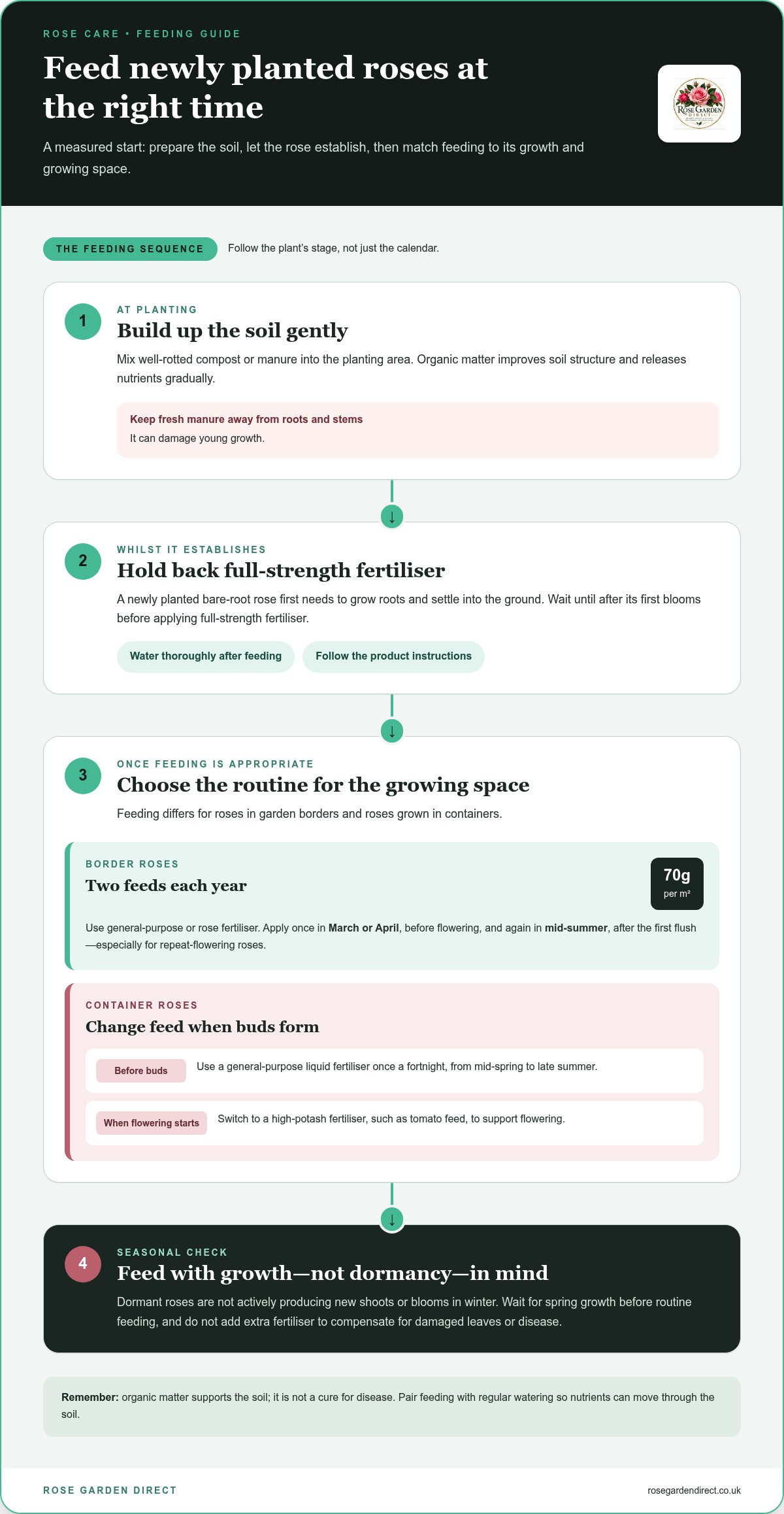
Newly planted roses need a measured start, not a heavy dose of feed. Add organic matter when planting, then wait until after the first blooms before applying full-strength fertiliser. Knowing how to care for newly planted roses means matching feeding to the plant’s stage of growth.
- Mix organic matter into the planting area before setting the rose in place. Well-rotted compost or manure improves soil structure and releases nutrients gradually. Keep fresh manure away from the roots and stems, as it can damage young growth.
- Hold back full-strength fertiliser while a bare-root rose establishes. Its first priority is growing roots and settling into the ground. Apply stronger feed only after its first blooms, following the product instructions and watering it into the soil.
- For roses in borders, apply 70g of general-purpose or rose fertiliser per square metre. Feed twice a year: once in March or April before flowering, then again in mid-summer after the first flush, especially for repeat-flowering roses.
- For container roses, use a general-purpose liquid fertiliser until flower buds form. Feed once a fortnight from mid-spring to late summer. When flowering starts, switch to a high-potash fertiliser such as tomato feed, which supports flowering.
- Match feeding to the rose’s growth stage, not just the calendar. Dormant roses aren’t actively producing new shoots or blooms in winter, so wait for spring growth before applying routine feed. Don’t add extra fertiliser to compensate for damaged leaves or disease.
- Use compost, composted manure or another organic fertiliser to build up the soil gradually. Monthly applications are recommended for roses, but keep the material clear of the stems and don’t pile it over the crown. To care for newly planted roses through their first season, pair feeding with regular watering so nutrients can move through the soil.
- Check the rose after feeding. Healthy new growth and developing buds indicate that the plant is responding. If leaves are damaged or growth is weak, check watering, drainage and signs of disease before adding more nutrients. Extra feed won’t solve problems caused by waterlogged ground or poor growing conditions.
How often should newly planted roses be watered in the UK?
- Water thoroughly after planting so moisture reaches the roots, not just the soil surface. Apply water slowly around the base and let it soak in rather than run off. This settles the soil around the roots and helps prevent dry pockets.
- Keep bare-root rose roots moist during the first few months. Check the ground around the plant regularly, especially in dry or windy weather. If the soil is dry below the surface, water deeply; if it is still wet, allow it to drain before watering again.
- During the growing season, roses do best with the equivalent of 1 inch of rainfall per week. Count rainfall towards that amount, then water when dry conditions leave the root area short of moisture. Sandy ground dries faster than heavier soil, so check the soil before watering.
- In the UK, water newly planted roses well during dry spells for at least two summers after planting. A dependable routine is central to caring for newly planted roses as they establish. Rainfall may reduce how often you need to water, but a brief shower might not reach the deeper roots.
- Water at ground level in the morning, directing the flow around the root zone. This gives moisture time to soak in and keeps leaves drier, helping reduce the risk of powdery mildew. Avoid frequent, light splashes that wet the surface without reaching the roots.
- Watch the rose and its soil together. Dry soil and drooping leaves can signal thirst, while persistently wet ground can point to poor drainage or excess watering. Part of how to care for newly planted roses is adapting your routine to these signs. Mulch helps retain moisture; keep it at least 10cm from stems and at least 5cm deep.
- Choose a rose suited to your garden and planting plans. Browse bare-root roses for a rose to plant during the UK bare-root season, from November to April.
Rose Garden Direct: Black Baccara Bareroot Rose
Rose Garden Direct offers the Black Baccara Bareroot Rose for gardeners planning to plant a bare-root rose. It’s a practical next step if you have prepared a suitable spot and want to choose a rose during the UK bare-root planting season, from November to April.
Plan to plant a bare-root rose promptly after receiving it, and avoid planting when the ground is frozen. Water thoroughly after planting, then keep the soil around the roots moist as the rose establishes. Pruning, feeding and checking leaves for pests or disease remain part of your seasonal care routine.
If you’re comparing rose types, Rose Garden Direct also offers the Blue Moon Hybrid Tea Bareroot Rose and The Apricot Queen Elizabeth Bareroot Rose. Visit Rose Garden Direct to view the Black Baccara Bareroot Rose.
Make your next rose choice with confidence
Let your garden’s space, light and planting conditions guide your choice. A clear seasonal routine makes it easier to notice what your rose needs as it establishes. Keep a simple record of new growth, flowering and changes in the leaves. These observations can help you adjust your care as the seasons change.
If you’re planning another planting, Rose Garden Direct offers the Black Baccara Bareroot Rose and Blue Moon Hybrid Tea Bareroot Rose, alongside the Dryopteris Male Fern 5L Potted Big Trunk. Choose an option that fits your garden and the conditions you can provide. A well-matched plant is a practical starting point for the care routine you’ve learned here.
For information about its rose range, contact Rose Garden Direct. With a suitable choice and consistent attention, you can give your new rose a sound start and enjoy watching it grow.
Frequently Asked Questions
What soil and drainage do newly planted roses need?
Roses need soil that holds moisture yet drains freely, rather than staying waterlogged around the roots. Before planting, fork well-rotted organic matter into the top 20-30cm of soil; use at least one bucket per square metre. If replacing an old rose, exchange soil to a depth and width of 45cm to reduce replant disease risk. Avoid planting where water collects after rain.
Should you feed newly planted roses, and when should fertiliser be applied?
Add organic matter when planting, but wait until a bare-root rose has flowered before applying full-strength fertiliser. This lets the plant establish before stronger feeding begins. For roses in borders, use 70g of general-purpose or rose fertiliser per square metre in March or April before flowering, then feed again in mid-summer. Container roses need a different feeding routine, based on their growth and flowering stage.
How do you prune newly planted roses after planting?
Don’t apply the same pruning cut to every rose type. In the first winter after planting, prune hybrid tea roses to leave strong stems 10-15cm above ground, and floribundas to about 15cm. For climbers or ramblers not already pruned at the nursery, leave strong stems 30-40cm high. Remove dead or damaged wood with clean, sharp secateurs, rather than cutting healthy growth indiscriminately.
What are the signs of transplant shock or disease in newly planted roses?
Transplant stress can cause wilting, drooping or leaf loss soon after planting. Check soil moisture first: dry ground points to thirst, while persistently wet soil can indicate poor drainage. Disease is more likely if symptoms spread or distinct marks appear, such as white powdery growth on the leaves. Remove fallen or affected leaves, improve airflow around the plant and avoid wetting the foliage when watering.


