

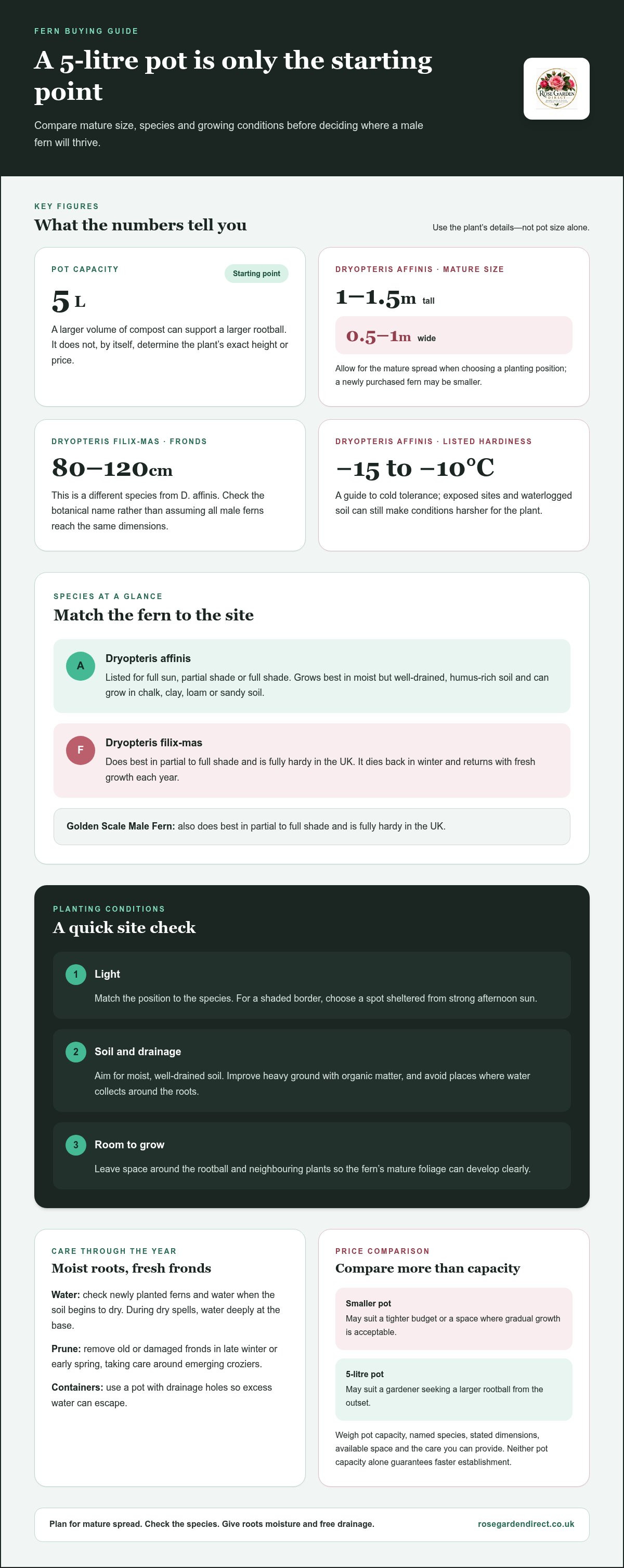
A 5-litre pot is only the starting point: a 5-litre Dryopteris male fern can grow to 1-1.5m tall and 0.5-1m wide at maturity. Male ferns are fully hardy in the UK. Dryopteris affinis can grow in sun or shade, while Dryopteris filix-mas performs best in partial to full shade.
Choosing by pot size alone won’t tell you whether a fern suits your garden. Its mature spread, preferred light and soil, and seasonal growth all help you decide where it will thrive. This reference covers planting and maintenance, hardiness, suitable garden uses and how to weigh the price against the plant’s size and needs, so you can make a practical choice for your space.
Key Takeaways
- Choose a planting spot with moist, well-drained, humus-rich soil to support steady growth.
- Remove old or damaged fronds in late winter or early spring to make room for fresh growth.
- Plan the fern’s position around its mature spread, using it where its foliage can add structure to a shaded border.
- The product is labelled pet safe; keep children from handling plants unless you can supervise them.
Growing and maintenance advice
Growing medium is the soil and organic matter that support a fern’s roots. Dryopteris affinis grows best in moist but well-drained, humus-rich soil and can grow in chalk, clay, loam or sandy soil. Improve heavy ground with organic matter to help drainage, and avoid planting where water collects around the roots.
Aspect means the amount of sunlight a planting spot receives. Dryopteris affinis is listed for full sun, partial shade and full shade. Male Fern, Dryopteris filix-mas, does best in partial to full shade, as does the Golden Scale Male Fern. For a shaded border, choose a position sheltered from strong afternoon sun. Match the fern’s light requirements to the conditions in your garden.
Planting means setting the fern’s root ball into prepared ground. Water the pot first so the compost is evenly moist. Dig a hole wide enough for the root ball and loosen the surrounding soil. Set the fern at the same depth it grew in its pot, then backfill, firm gently and water around the roots. Leave room for the plant to develop instead of crowding it against neighbouring plants. In a container, use a pot with drainage holes and ensure excess water can escape.
Watering keeps the root zone moist while allowing surplus water to drain. Check the soil around a newly planted fern and water when it begins to dry. During dry spells, water deeply at the base rather than wetting only the surface. Established plants also need attention when rainfall is low. Deciduous means the fern loses its fronds in winter and grows again. Male Fern, Dryopteris filix-mas, produces tightly coiled spring fronds that unfurl as they grow. Remove old or damaged fronds in late winter or early spring, cutting carefully to avoid emerging croziers. This clears tired foliage and leaves room for fresh growth.
Hardiness and garden uses
Hardiness describes a plant’s ability to withstand winter conditions outdoors. Male Fern, Dryopteris filix-mas, is fully hardy in the UK, as is the Golden Scale Male Fern. These ferns can stay planted outside through ordinary UK winters, rather than needing to be lifted and brought indoors for protection.
Dryopteris affinis is listed with a hardiness range of -15 to -10°C. This gives a useful indication of its cold tolerance, but garden conditions still matter. Exposed positions can feel harsher than sheltered spots. Soil that stays waterlogged can also put stress on roots during cold weather. Choose a planting place that drains freely, and avoid low points where water collects.
Garden use means the role a plant plays in a planting scheme. Male ferns suit shaded borders, woodland-style gardens and sheltered spaces beneath established trees. Their divided fronds add a strong leafy shape beside broad-leaved plants, spring bulbs or low groundcover. Use one as a focal clump, or repeat ferns along a shaded path for a consistent look. Leave enough room for each plant’s mature foliage to show clearly.
Deciduous means a plant sheds its leaves or fronds seasonally. Male Fern, Dryopteris filix-mas, dies back in winter and returns with fresh growth each year. This seasonal change suits a border that can accommodate a quieter winter appearance. Pair it with evergreen plants if you want the planting to retain structure through colder months. In spring, the tightly coiled fronds unfurl, creating a clear seasonal feature.
For a practical choice, match the fern to the site first. Choose D. filix-mas or Golden Scale Male Fern for a fully hardy UK planting. Consider D. affinis where its listed cold tolerance suits your garden. Then assess shelter, drainage and neighbouring plants. This helps you position each fern so its hardiness and foliage complement the planting scheme.
Plant size and price
Pot volume is the amount of compost a container holds. A 5-litre pot holds more growing medium than a smaller pot and can support a larger rootball. That can help a fern establish, but soil moisture, planting conditions and ongoing watering also matter. Pot volume alone does not determine price; plant size and the price set for that individual plant affect the comparison.
Mature size is the height and width a plant can reach as it grows. Dryopteris affinis is listed as reaching 1-1.5m tall and 0.5-1m wide. Those dimensions describe a mature plant, not necessarily its height or spread in a newly purchased pot. Allow space for future growth when choosing a position, rather than judging fit by the current foliage alone.
Pot size is a useful buying guide, but it does not identify the exact height of every fern. For a 5-litre plant, check the plant’s stated botanical name and expected mature dimensions. Dryopteris filix-mas, for example, can produce fronds reaching 80-120cm. This is a different species from D. affinis, so don’t assume that all male ferns share the same dimensions.
Establishment is the process of a plant settling into its new growing position. A larger rootball can give a 5-litre fern more existing roots and compost than a smaller-pot plant. Handle the rootball gently during planting and keep it evenly moist as it settles. Good drainage matters too; roots need moisture without sitting in waterlogged ground.
Price comparison means weighing the cost against the plant’s size and growing needs. Compare pot capacity, the named species and any stated plant dimensions together. A smaller pot may suit a tighter budget or a space where gradual growth is acceptable. A 5-litre pot may suit a gardener seeking a larger rootball from the outset. Neither capacity alone guarantees faster establishment. Choose the plant that fits the available space, planting conditions and care you can provide.
Is Dryopteris male fern safe for pets or children?
Pet-safe means a plant is labelled as suitable around pets. The Dryopteris Male Fern 5L Potted Big Trunk is labelled pet safe. This is useful when choosing a fern for a garden shared with cats or dogs. It does not mean every plant, potting material or garden product nearby carries the same label.
Child safety means reducing a child’s access to things they might touch or put in their mouth. A pet-safe label is not a child-safety rating. Supervise young children around garden plants, including Dryopteris, and teach them not to eat leaves or soil. Place pots where small children cannot easily pull them over or reach into the compost.
Plant placement means choosing a position that suits the fern and your household. A stable, sheltered spot helps prevent a pot being knocked during play. Avoid narrow paths, play areas and doorways where children or pets regularly pass. In a border, leave clear access around the fern so routine garden work does not bring loose fronds into play spaces.
Garden hygiene means removing plant debris and loose materials from the growing area. Pick up cut fronds after pruning and store compost and other garden materials securely. Wash your hands after planting or handling soil, especially before preparing food. These practical steps help keep the growing area tidy without suggesting the fern presents a specific hazard.
For households with pets, the pet-safe label offers a clear point to consider alongside the fern’s growing needs. For children, supervision and sensible placement remain important because the label does not cover them. Choose the right pot size for the intended position, then keep the fern away from busy play zones. View the Dryopteris male fern in a 5-litre pot if you’re choosing a labelled pet-safe option for your garden.
Rose Garden Direct: Black Baccara Bareroot Rose
Rose Garden Direct is a natural next step if you’re choosing a hardy fern for your garden. Its Dryopteris Male Fern 5L Potted Big Trunk is a practical option when you want a pot-grown male fern. Consider your planting space, light levels and soil drainage before deciding where it will go. The earlier guidance can help you match the fern’s needs to your garden, without treating the pot size as its final mature size.
If you’re comparing plant types, Rose Garden Direct also offers the Black Baccara Bareroot Rose, Blue Moon Hybrid Tea Bareroot Rose and The Apricot Queen Elizabeth Bareroot Rose. These are roses, not fern alternatives, but may suit a separate planting choice.
Visit Rose Garden Direct to explore its plants.
Choose a fern that fits your garden plans
Decide where the fern will go before choosing its final position. Consider how it will sit alongside existing plants, how much space you want its foliage to occupy, and whether its seasonal changes suit the border. This helps make the purchase a considered addition to your garden, rather than an impulse based on pot size alone.
If you’re ready to choose a 5-litre Dryopteris male fern, use the care points in this guide to decide whether your intended spot is suitable. Think about the conditions you can provide and the look you want the planting to achieve. A clear plan makes it easier to select the right plant for your space.
Rose Garden Direct offers the Dryopteris Male Fern 5L Potted Big Trunk, alongside the Black Baccara Bareroot Rose and Blue Moon Hybrid Tea Bareroot Rose. Contact Rose Garden Direct for advice as you consider your next planting choice. With a suitable plant and a well-chosen position, you can move ahead with confidence.
Frequently Asked Questions
What is Dryopteris male fern?
Dryopteris is a genus of ferns, and Male Fern usually refers to Dryopteris filix-mas. It is a hardy, deciduous fern with divided fronds that emerge curled before opening. The name can be confused with related Dryopteris species, including D. affinis. Check the botanical name on a plant listing when comparing ferns, as species can differ in mature size and preferred growing conditions.
What is the price of a 5-litre Dryopteris male fern in the UK?
This is the price for that named product, rather than a general price for every 5-litre male fern. Compare listings by checking the botanical name and pot volume, since similar common names may refer to different Dryopteris species or product sizes.
What are the pot dimensions and typical plant size for a 5-litre male fern?
A 5-litre label describes the volume of compost, not the pot’s height or width. Physical dimensions can vary with pot shape, so the litre size alone cannot give exact measurements. A 5-litre Dryopteris filix-mas may produce fronds reaching 80-120cm. Treat that as potential frond height, not a measurement of the pot or the plant at purchase.
Where should Dryopteris male fern be planted, and what soil and light does it need?
Plant Dryopteris filix-mas in partial or full shade, ideally in fertile soil that stays moist without becoming waterlogged. A sheltered border beneath light tree cover, for example, can provide suitable shade. If you’re considering D. affinis, its listed light suitability is broader and includes full sun. Match the species to the actual light and drainage in your chosen spot.
How should a newly planted Dryopteris male fern be watered and cared for?
Water a newly planted fern around its root ball, directing water onto the soil rather than relying on rain reaching the fronds. Check the ground regularly in dry weather and water when the root area begins to dry. In a container, ensure water drains freely. Remove tired foliage carefully, taking care not to damage new shoots as they emerge.
When is the best time to plant Dryopteris male fern in the UK?
Plant a container-grown Dryopteris when the ground is workable, not frozen or waterlogged. This gives you time to prepare the spot properly and settle the root ball into the surrounding soil. Avoid planting during dry weather unless you can keep the root area moist. After planting, pay close attention to watering while the fern adjusts to its new position.


