
A shady, reasonably moist corner can be an ideal place for a hardy fern. Most ferns reach 60cm-1.2m tall, and many are long-lived perennials. Comparing RHS Plants with specialist growers for hardy fern selection and pot size helps you match a plant’s mature height and hardiness rating to your garden or container.
Choosing a fern means more than finding one that survives outdoors. Consider the light, moisture and space available, then decide whether a pot-grown plant suits the position. It’s easy to focus on a plant’s current size and overlook how large it may eventually grow.
This guide explains how RHS hardiness ratings and pot sizes help you compare hardy ferns with specialist growers’ selections. You’ll learn what to check for shady borders and container growing, so you can choose a fern that fits your garden and its growing conditions.
Key Takeaways
- Match a fern’s mature height and hardiness rating to your garden space and local growing conditions.
- Use shade and moisture needs to narrow down suitable choices for borders, walls and spots beneath trees.
- Choose a pot size that gives the plant room to grow, and plan for fresh compost as it develops.
- Compare nursery listings by plant size and growing format, not just by the fern’s name.
Why plant hardy ferns?
Hardy ferns are long-lived perennials that bring reliable foliage to UK gardens. Their varied forms suit shaded borders, damp ground and containers.
Growing ferns in containers
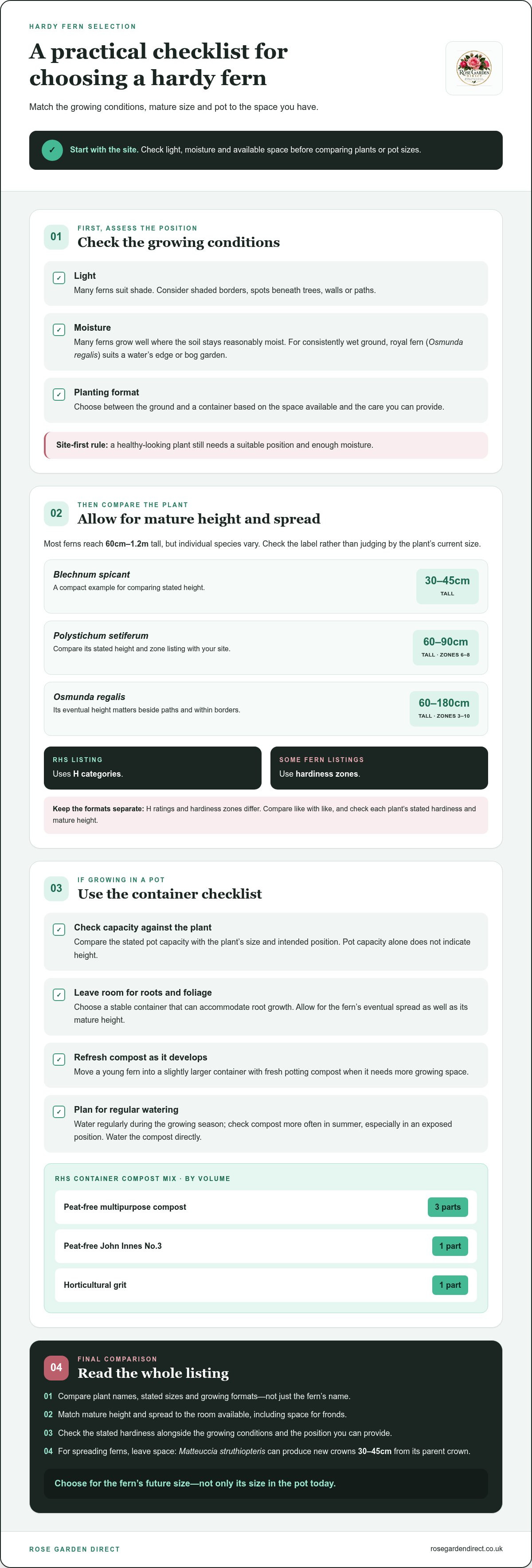
Containers make it possible to grow a fern where garden soil or planting space is unsuitable. Choose a pot with room for the plant’s roots, then keep its compost reasonably moist. For container-grown ferns, the RHS recommends a mix of three parts peat-free multipurpose compost, one part peat-free John Innes No.3 and one part horticultural grit by volume. A tough Dryopteris erythrosora can grow in a pot as well as in the ground.
Using ferns in gardens and containers
Use fern foliage to add structure beneath trees, along shaded borders or beside paths. Fern foliage can create contrast when paired with flowering plants. The British native Polystichum setiferum is one option for garden planting. Evergreen forms keep their foliage through the year, while deciduous types bring seasonal change. In containers, allow for the fern’s eventual spread.
In person, you can inspect a fern’s foliage and pot before choosing. Online listings make it easier to compare plant names, stated sizes and growing formats. Either way, check the label for mature height and growing conditions, then compare these with your garden. A healthy-looking plant still needs a suitable site and enough moisture.
Some ferns spread through creeping rhizomes or new crowns, so leave space around them. Matteuccia struthiopteris can produce new crowns 30-45cm from its parent crown. In spring, sections of creeping rhizome should be 5-7.5cm (3-4in) long, each with at least one growth bud. This helps explain why a small fern may gradually occupy more ground.
For wet ground, choose a fern that thrives in consistently moist conditions. Royal fern, Osmunda regalis, suits planting at the water’s edge or in a bog garden. Many ferns also grow well in shade where the soil stays reasonably moist. Match the site first, then decide between planting in the ground and growing in a container.
Fern heights and hardiness ratings
Before choosing a fern for a border or woodland position, compare its mature height with its hardiness rating. These details describe different aspects of suitability, so consider both when assessing the planting site.
Hardiness filter categories
Start with the space available, then compare each plant’s stated hardiness measure. Blechnum spicant grows 30-45cm tall, whilst Polystichum polyblepharum reaches 80cm. Height affects its position in a border and the room needed as fronds unfurl. Comparing RHS plants with specialist growers for hardy fern selection and pot size helps you weigh growing information against the plants offered.
RHS ratings and fern hardiness zones
RHS ratings use H categories, while some fern listings use hardiness zones. These formats differ, so compare like with like rather than treating an H rating as a zone. Fern listings can give different details on mature height and hardiness, so check the information for the plant you choose. Polystichum setiferum is listed for zones 6-8 and grows 60-90cm tall.
Heights vary across the selection. Adiantum aleuticum grows 30-60cm and has an RHS rating of H6. Polystichum aculeatum reaches 40-60cm and is rated H7. Fern hardiness and mature size vary by species, so check the growing details before choosing one. Compare each plant’s mature height with the space available, including room for its fronds.
Zone listings provide a separate comparison. Athyrium filix-femina is listed for zones 4-9, while Osmunda regalis is listed for zones 3-10. The royal fern reaches 60-180cm, so consider its eventual height beside paths and within borders. Use the RHS plants-versus-specialist-growers comparison for hardy fern selection and pot size to assess plant details alongside the growing format.
A tree fern can slowly form a trunk 2-3 metres high, making its eventual scale important in garden planning. Autumn planting can help a fern establish before winter. Check that the site and compost suit its growing needs. To compare an available hardy Dryopteris fern, consider its mature size alongside its pot size.
Fern pot sizes and container growing
Pot size affects the growing space available to a fern and how often its compost needs attention. For container growing, compare the plant’s current root space with its mature spread and the space available. A fern with a large spread needs a stable container; a compact type may suit a smaller patio. Pot capacity alone doesn’t indicate the plant’s height.
As a young fern develops, move it into a slightly larger container with fresh potting compost. Don’t choose by appearance alone: check that the roots have room to grow and that the container will suit the plant as it matures. This staged approach gives the roots fresh growing space without letting the pot dominate.
Container-grown ferns need regular watering during the growing season. Check the compost more often in summer, especially if the pot is in an exposed position. Water the compost directly rather than relying on rainfall to reach the roots. A container lets you control where the fern sits, but needs more regular attention than an established fern in the ground.
Use these practical checks when comparing pot-grown plants:
- Compare the stated pot capacity with the plant’s size and intended position.
- Choose a container that can accommodate root growth and remain stable beneath the foliage.
- Plan to refresh the compost when moving a young fern into a slightly larger pot.
- Include regular watering in your growing-season routine, particularly during summer.
Ferns that grow in the ground can also thrive in containers. Dryopteris erythrosora, for example, can grow in either setting, so choose according to the space available and the care you can provide. A pot can also make a fern easy to position as a feature beside a doorway or in a shaded seating area.
Blechnum spicant is a reminder to consider the whole plant, not just its pot. Its mature height and the space its fronds need matter when choosing where to place a container. Match the pot to the fern, then the fern to the site, to keep the arrangement practical through the seasons.
Hardy fern selection for UK gardens
Choose a fern by matching its moisture needs, light requirements and growth habit to the planting site. British gardens include dry walls, shaded woodland edges and damp ground, so no single fern suits every position. Check whether the foliage is evergreen or deciduous, and leave room for mature fronds and spreading growth.
For a dry, cool spot with little direct sunlight, consider hart’s tongue fern, Asplenium scolopendrium. Once established, it tolerates summer drought and suits areas where other plants may struggle. The smaller Asplenium trichomanes is another choice for dry conditions, growing in limestone walls. These examples show why the site matters as much as the fern’s hardiness label.
For a British native that can cope with drier soil once established, consider soft shield fern, Polystichum setiferum. It can suit a shaded border where the soil isn’t consistently moist. Ferns can also grow beneath trees, according to the UK Government. Check the ground beneath the tree, then match the fern to the available light and moisture.
Wet sites call for a different choice. Onoclea sensibilis establishes quickly in wet conditions and can grow in sun or shade. For a bog garden, check that the soil stays moist, then choose a fern suited to those conditions. Don’t plant a fern suited to drier ground in saturated soil just because it tolerates shade.
Use this short selection check before planting:
- Match the fern’s moisture needs to the soil, from dry limestone to wet ground.
- Check whether the site receives direct sun, dappled shade or deeper shade.
- Allow room for mature foliage and spreading fronds, especially near paths.
- Decide whether evergreen foliage or seasonal change from deciduous growth suits the border.
For a larger planting feature, compare hardy fern choices with the space and conditions available. Explore hardy fern options to find a Dryopteris suited to your garden plans.
Rose Garden Direct: Black Baccara Bareroot Rose
Rose Garden Direct offers the Dryopteris Male Fern 5L Potted Big Trunk for gardeners choosing a hardy fern in a larger pot. Its named pot size helps you compare listings and plan where the plant will sit, while mature height, available space and growing conditions remain important selection points.
If you’re also choosing roses, options include Black Baccara Bareroot Rose, Blue Moon Hybrid Tea Bareroot Rose and The Apricot Queen Elizabeth Bareroot Rose. These are separate from the potted fern, so match each plant to its intended place in the garden.
Visit rosegardendirect.co.uk to explore the Dryopteris Male Fern 5L Potted Big Trunk and other listed plants.
Plan your next garden planting
Turn your fern comparison into a simple planting plan. Note the available space, the foliage effect you want and how the fern will sit alongside nearby plants. This helps you choose for the garden as a whole, rather than treating pot size as a decision on its own. Use what you learn about the site to guide future planting choices.
A considered comparison of RHS plants and specialist growers for hardy fern selection and pot size can help you make that choice with confidence. Take the next step when you’re ready to choose plants for your garden. Contact Rose Garden Direct to discuss your selection, and make your next planting decision with a clear plan.
Frequently Asked Questions
Evergreen or deciduous?
Evergreen ferns retain their foliage through winter, while deciduous ferns lose it as the seasons change. Choose evergreen growth for a consistent leafy presence, or deciduous types if you welcome seasonal change. In a mixed border, combining both can keep some foliage visible while other plants rest. Consider, too, whether fallen fronds will be easy to clear.
Will these ferns survive a UK winter?
Many hardy ferns can grow outdoors in the UK, but winter suitability depends on the fern’s hardiness rating and the conditions in your garden. For example, Dryopteris erythrosora has an RHS rating of H4, while Polystichum polyblepharum is rated H7. Check the rating for the named variety, then consider how exposed or sheltered its planting spot is.
Which hardy fern varieties does the RHS recommend for UK gardens?
RHS-rated examples include Adiantum aleuticum, Blechnum spicant and Polystichum polyblepharum. These examples vary in height, so compare their mature size when choosing a fern for your garden. Hardiness ratings can help you compare how well each variety may suit your garden. Use these details to compare plant size and hardiness, then select a variety suited to the space and growing conditions you have.
Which UK specialist growers offer the widest selection of hardy ferns?
There isn’t a useful widest-selection ranking without comparing current catalogues on the same basis. Rose Garden Direct supplies potted Dryopteris hardy ferns, including the Dryopteris 1 litre pot, Dryopteris Male Fern 5L Potted Big Trunk and Dryopteris 7.5L Ferns Hardy. These options give gardeners different pot capacities to consider when choosing a plant for a border or container.
How do RHS fern recommendations compare with specialist nursery selections?
RHS plant information helps you assess named ferns, including their hardiness ratings and mature heights. A specialist grower’s selection shows which plants and pot formats are available to buy. Use both perspectives: first identify suitable varieties and growing conditions, then compare available plants by name, size and pot format. This keeps horticultural suitability distinct from the buying decision.
Which hardy fern varieties are evergreen and which are deciduous?
Hart’s tongue fern, Asplenium scolopendrium, is evergreen, while ostrich fern, Matteuccia struthiopteris, is deciduous. This contrast can help when planning a border: one keeps its foliage through winter, while the other brings seasonal growth. Check the label for the specific fern’s habit before planting, especially if you want consistent winter foliage in a particular part of the garden.


