

Dry shade doesn’t rule out ferns, but the best hardy ferns for shady gardens depend on how much moisture the soil holds. Choose ferns that suit your site: many prefer moist, well-drained ground, while some can cope with drier conditions once established. Most grow best in dappled shade rather than dense darkness.
If you’ve struggled to find plants for a shady corner, start by matching the fern to the soil beneath it. Moist borders can suit choices such as shuttlecock fern, while dry shade calls for varieties that tolerate drier conditions.
This guide explains how to choose between damp and dry shade, what to expect from Japanese painted fern, and how to combine ferns with shade-loving grasses and perennials. You’ll also learn how foliage shape and seasonal growth can help you select plants for the space, whether you’re filling a woodland edge or planting beneath a tree.
Key Takeaways
- Match fern choice to soil moisture: some suit damp borders, while others can cope with dry shade once established.
- Use Japanese painted fern for colour and fine foliage, and give it shelter from hot afternoon sun.
- Combine ferns with shade-loving grasses and perennials to vary leaf shape and fill woodland-edge spaces.
- Decide whether you need low ground cover or a stand-alone feature before choosing a fern’s size and growth habit.
Ferns combined with shade-loving grasses and perennials
Partial shade beneath trees or beside buildings can suit ferns and companion plants. Before choosing, check how much light the spot gets, how moist the soil stays and whether it drains well.
Planting beneath trees and near buildings
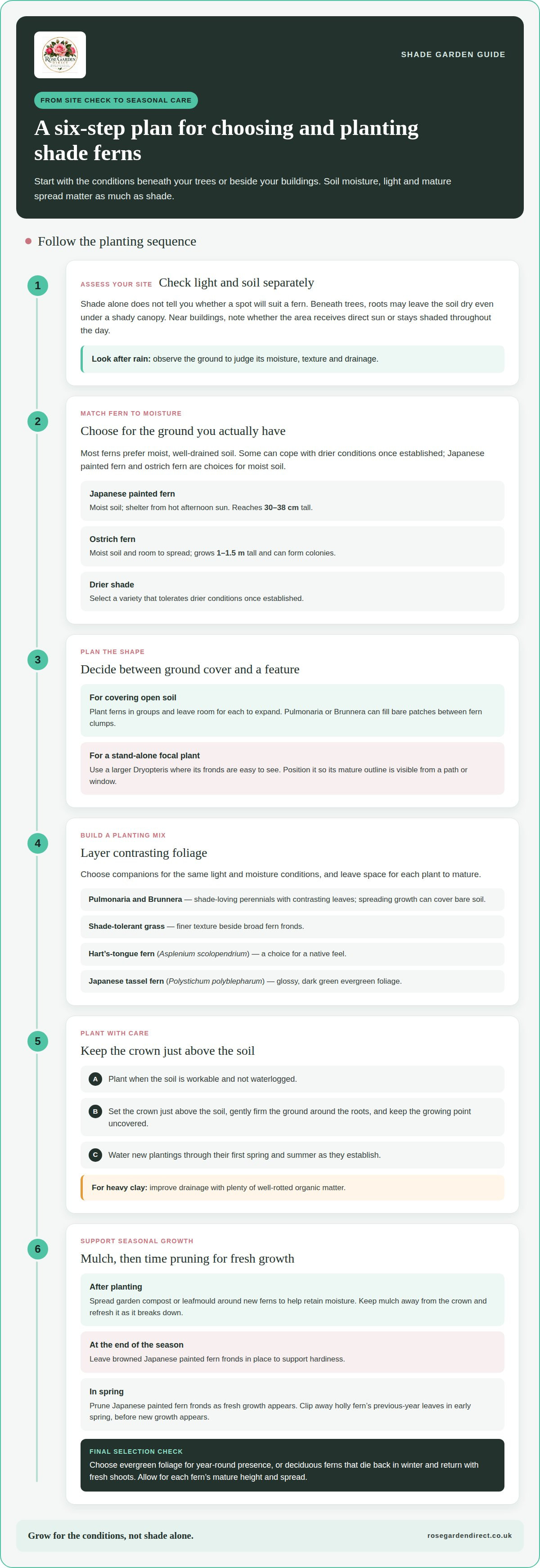
Beneath trees, assess the light and soil moisture separately: roots can leave the ground dry even under a shady canopy. Near buildings, note whether the spot gets direct sun or stays shaded throughout the day. Choose ferns and companions for the conditions you actually have, not shade alone. Leave room for shrubs and established roots.
Choosing companions for fern shade
Pair fern fronds with shade-loving perennials such as Pulmonaria and Brunnera. Their contrasting leaves add variety, and their spreading growth can cover bare soil. A shade-tolerant grass provides finer texture beside broad fern fronds. For a native feel, include hart’s-tongue fern, Asplenium scolopendrium. Polystichum polyblepharum adds glossy, dark green foliage. Plant in groups, leaving space for each plant to mature.
Matching plants to soil conditions
Most ferns prefer moist, well-drained soil. Check the needs of each fern and its companions rather than assuming they all require the same soil pH. Observe the ground after rain to judge its texture and drainage. Free-draining soil suits ferns; improve heavy clay with plenty of well-rotted organic matter. Choose plants suited to the site, then water new plantings through their first spring and summer as they establish.
Japanese painted fern size, colour and hardiness
Japanese painted, ostrich, lady, Japanese tassel and holly ferns can all suit UK gardens. Compare their mature size and moisture needs, and decide whether you want evergreen foliage or seasonal growth.
Japanese painted fern colour and hardiness
Japanese painted fern (Athyrium niponicum) reaches 30-38 cm tall, suiting the front or middle of a shaded border. Its divided fronds bring colour and a different texture from broad-leaved perennials. It prefers moist soil and shelter from hot afternoon sun, rather than full sun. Leave browned fronds in place at season’s end to support hardiness; prune them in spring as fresh growth appears. This timing avoids cutting into emerging fronds.
Comparing fern size and spread
Ostrich fern (Matteuccia struthiopteris) grows 1-1.5 m tall, so allow space for its spreading habit. It prefers moist soil, some sun and protection from hot afternoon sun. Rhizomes or spores can form colonies as it establishes. Lady fern (Athyrium filix-femina) reaches about three feet tall and a foot wide. It grows best in moist soil, in shade or partial sun. Compare mature spread before placing either beside a path or smaller species.
Japanese tassel fern (Polystichum polyblepharum) grows 45-60 cm tall, with glossy evergreen fronds. Its size can suit container growing, and many ferns grow well in pots. Choose a shaded position and keep the compost from drying out. Allow its spreading fronds room beyond the crown. Pair it with smaller plants only if they have space to grow without crowding.
Clip away holly fern’s previous-year leaves in early spring, before new growth appears. For year-round presence, choose between evergreen species and deciduous ferns, which die back in winter and return with fresh shoots. Dryopteris affinis offers a colour change: its young fronds are bright yellow-green, maturing to rich green. Differences in height, spread and seasonal growth help you narrow down the right fern for your space.
Ferns as groundcover and specimen plants
Ferns can cover bare ground in groups or act as standalone focal plants. Decide which role you want, then match the planting method and spacing to the fern’s mature growth habit.
In UK gardens, plant when the soil is workable and not waterlogged. Set each fern with its crown just above the soil, then gently firm the ground around its roots. Water new plants during their first spring and summer as they establish. Keep the crown uncovered, as burying it can interfere with healthy growth.
For ground cover, plant ferns in groups to fill open soil. Once established, their foliage can help limit the growth of unwanted plants. Combine spreading species with lower-growing companions, leaving room for each to expand. Pulmonaria or Brunnera can fill bare patches between fern clumps, while silver or bright foliage adds contrast. Make sure each companion suits the same light and moisture conditions.
Use a larger Dryopteris as a specimen where its fronds are easy to see, rather than crowding it among smaller plants. One fern can anchor a shaded bed; a group creates a fuller woodland effect. Consider whether the species is deciduous or evergreen, as this affects the planting’s winter structure. Position specimen plants where their mature outline is visible from a path or window.
Spread organic mulch, such as garden compost or leafmould, around newly planted ferns to help retain moisture while roots establish. Keep it away from each crown so the growing point stays uncovered. Refresh the mulch as it breaks down, without piling it against the plant. Homemade compost is a practical option if available.
Once established, well-matched plantings may need less additional watering and fertiliser. Choose Dryopteris for a suitable shaded position and pair it with ground-covering perennials that share the site’s conditions. Water new divisions until established; divide ferns in spring or autumn when you want to increase or relocate them. This creates a layered planting without filling every gap at once.
Ferns for damp, dry and shady garden sites
Match a fern to the soil moisture, then consider light and mature spread. Shade alone does not tell you whether a spot will suit it. Choosing hardy ferns for shady gardens starts with observing how the soil behaves between rainfall and dry spells.
Some species spread vigorously. Ostrich fern, Matteuccia struthiopteris, spreads by rhizomes or spores and can form colonies once established. Give it space, or choose a less spreading fern for a compact border. Ferns have different growth habits, so identify each plant before placing it near paths or smaller companions.
For dry shade, consider evergreen Polystichum setiferum ‘Proliferum Wollaston’, which suits drier conditions. ‘Herrenhausen’ tolerates dry soils and can grow in a container. Dryopteris affinis can tolerate very cold, dry situations once established, but may reach 1 m tall if conditions aren’t too dry. Water new ferns as they settle, then assess how the soil holds moisture before adding more.
Damp ground offers different choices. Shuttlecock fern, Matteuccia struthiopteris, prefers moist soil and grows 1-1.5 m tall. Royal fern, Osmunda regalis, grows best in a damp spot and can reach 1.5 m. Give these larger species room, and avoid planting them where soil dries quickly beneath tree roots.
Check the site in different conditions, not only after rain. Soil beneath shrubs may dry as roots compete for moisture, while a shaded border can stay damp. Most ferns prefer moist but well-drained ground; improve heavy clay with well-rotted organic matter. For hardy ferns for shady gardens, select a species suited to the site instead of relying on extra watering alone. Deciduous fronds die back in winter; evergreen Polystichum keeps its leaves for year-round structure.
For a container-grown option suited to a shaded planting plan, browse hardy Dryopteris ferns.
Rose Garden Direct: Black Baccara Bareroot Rose
Rose Garden Direct offers the Black Baccara Bareroot Rose for gardeners planning colour beyond a shaded fern bed. For the shade planting itself, the Dryopteris Male Fern 5L Potted Big Trunk is a relevant option to consider. Choose it for a site that suits Dryopteris, then use the guidance above to assess light, soil moisture and drainage.
Grow roses and ferns in positions suited to their individual needs. For other parts of the garden, Rose Garden Direct offers the Black Baccara Bareroot Rose, Blue Moon Hybrid Tea Bareroot Rose and The Apricot Queen Elizabeth Bareroot Rose, alongside a hardy fern option. Browse the range to plan plants for different areas of your garden.
Explore Rose Garden Direct’s roses and Dryopteris fern to find plants for your garden.
Build your planting plan around the site
Start with a simple site check. Mark the areas that stay shaded, note where the ground dries first, and decide which spaces need foliage at eye level or near the ground. This gives each area a clear purpose before you choose plants. Choosing hardy ferns for shady gardens works best as part of a wider planting plan, rather than as a last-minute fix for bare soil.
Keep the plan flexible as the garden changes. A tree canopy thickens, shrubs mature, and seasonal light shifts; revisit the planting if conditions change. Leave room for access and future growth, so routine care stays straightforward. A quick note about the soil after rain and during a dry spell can make that review more useful. For help with your next choice, contact Rose Garden Direct for fern advice. Start with the site details you’ve observed and move ahead with confidence.
Frequently Asked Questions
What are the best ferns for deep shade and dry shade?
For dry shade, consider Polystichum setiferum ‘Proliferum Wollaston’ or ‘Herrenhausen’, which tolerate drier soil. Once established, Dryopteris affinis can also cope with cold, dry conditions. Deep shade is more challenging: most ferns grow poorly without some light, so choose a spot with dappled light where possible. Don’t treat all shaded ground alike; dryness beneath tree roots can determine which fern establishes successfully.
Which hardy ferns suit damp or waterlogged shade?
For damp shade, royal fern (Osmunda regalis) and shuttlecock fern (Matteuccia struthiopteris) suit moist ground. Damp soil is not the same as persistent waterlogging: ferns generally need moisture as well as drainage. If water sits on the surface, improve the planting conditions rather than assuming a moisture-loving fern will thrive. Keep larger ferns out of narrow borders, where their mature spread may crowd neighbouring plants.
How do you care for hardy garden ferns through the year?
In spring, look for new shoots, called croziers, before clearing away old growth. Divide established ferns in spring or autumn, then water the divisions until they settle in. Water newly planted ferns during summer as their roots establish. Ferns reproduce differently from flowering plants, so their fertile fronds can help distinguish them in a border. This helps distinguish fern growth from nearby flowering plants.
Which ferns are evergreen and which die back in winter?
Evergreen ferns, including Japanese tassel fern (Polystichum polyblepharum), keep their leaves through winter. Deciduous ferns die back in autumn and produce fresh growth in spring. Dryopteris affinis is semi-evergreen, offering a middle ground between full winter cover and seasonal dieback. Check a fern’s growth habit before planting if you want the border to retain visible structure in colder months.
How large do popular hardy fern varieties grow?
Allow space for the mature height, not just the size of a young plant. Dryopteris filix-mas grows around 90 cm tall, while autumn fern (Dryopteris erythrosora) reaches 60 cm. Himalayan maidenhair fern (Adiantum venustum) is smaller, growing 22-38 cm tall. These differences help place taller ferns behind lower plants and reserve the front of a border for compact varieties.
Are any garden ferns toxic or invasive in the UK?
Ostrich fern spreads by rhizomes or spores and can form colonies once established, so give it room to grow.


