

Planting depth matters as much as the rose you choose. For hybrid tea roses in the UK, set the graft union a couple of inches below soil level. Choose a sunny spot with free-draining soil that retains some moisture, and prepare the ground before planting.
Getting these basics right gives your rose a sound start, but the best choice also depends on the space and effect you want. This guide covers soil preparation, positioning and variety selection, and compares hybrid tea roses with floribundas. Use the practical differences to decide whether upright growth and individual blooms or clusters of flowers suit your garden better.
Key Takeaways
- Choose a planting position that supports steady growth, and prepare the ground to help your rose settle in.
- Plan spacing and planting time around the rose type and the conditions in your garden.
- Match a variety to your border and flower preferences, with options such as Blue Moon to consider.
- Compare the upright habit and flower style of hybrid teas with floribundas before choosing.
How Deep Should I Plant My Hybrid Tea Rose?
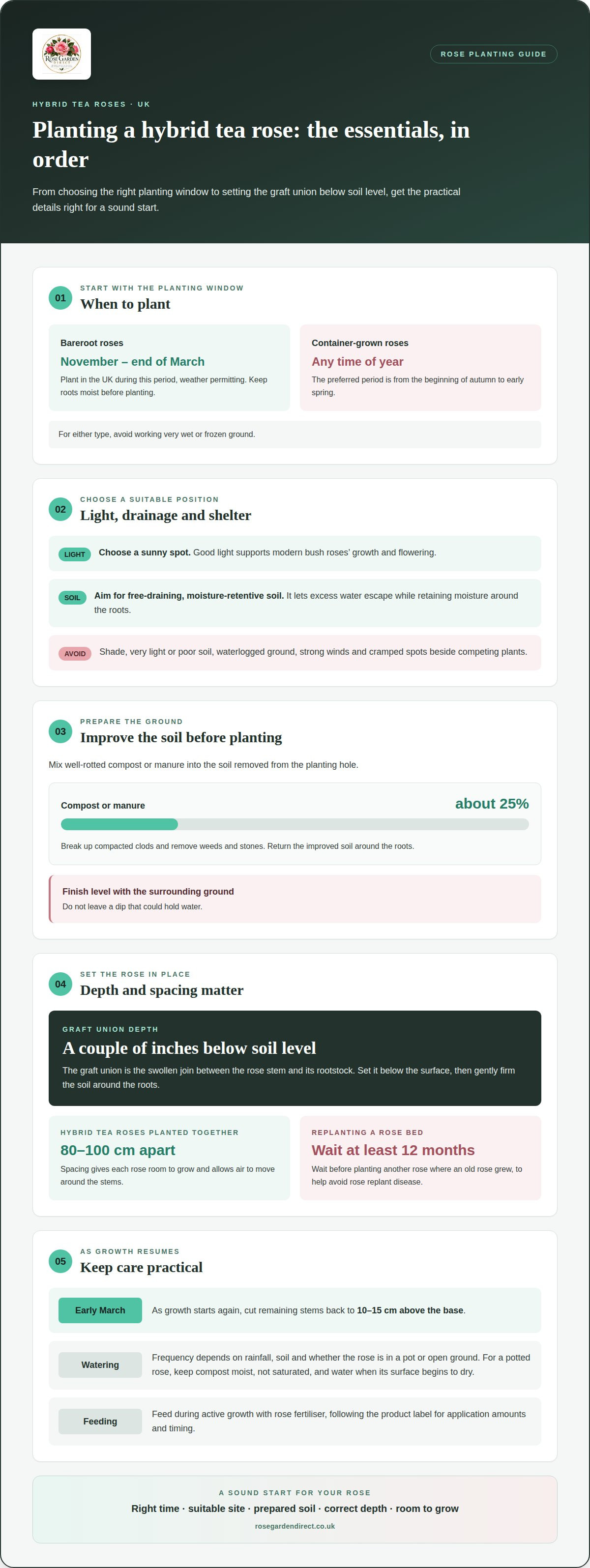
The graft union is the swollen join between the rose stem and its rootstock. Set it a couple of inches below soil level, then gently firm the soil around the roots. This depth helps anchor the rose and keeps the join beneath the soil surface.
Free-draining, moisture-retentive soil lets excess water escape while keeping enough moisture around the roots. Choose a sunny position, as modern bush roses grow best with good light. Avoid shade, very light or poor soil, and waterlogged ground. Strong winds can also lead to uneven growth, so a sheltered spot gives the plant more consistent conditions.
A sheltered site is protected from strong winds and exposure. For a rose bed, choose a sunny spot with workable soil rather than a cramped corner beside competing plants. Hybrid tea roses can flower repeatedly from summer into autumn, and good light supports their growing season. Container-grown roses can be planted at any time of year, although planting from the beginning of autumn to early spring is preferred.
A container-grown rose is raised in a pot rather than lifted bare-root. Use a large pot with drainage holes and free-draining growing medium. Keep the compost moist, not saturated, checking it regularly, especially in dry summer weather. Water when the surface begins to dry, directing water to the base of the plant.
Watering frequency depends on rainfall, soil and whether the rose grows in a pot or open ground. Feed during active growth with rose fertiliser, following the product label for application amounts and timing. An RHS hardiness rating indicates how well a plant tolerates cold. Hybrid tea roses suit sunny, sheltered UK gardens, but winter exposure and hardiness vary between varieties. Use the individual cultivar’s RHS rating when choosing a rose for your garden.
Planting and soil preparation
Prepare the planting hole and soil before setting in the rose. Timing, drainage and planting depth all affect how it establishes.
Bareroot and Potted Planting Times
Bareroot roses are dormant plants supplied without soil around their roots. In the UK, plant them from November to the end of March, weather permitting. Container-grown roses can be planted at any time of year, though the preferred period runs from the beginning of autumn to early spring. Keep the roots moist before planting, and avoid working very wet or frozen ground.
Planting Site Selection
A suitable planting site gives a rose enough light and avoids persistently wet ground. Choose a sunny position with free-draining, moisture-retentive soil. Shade, very light or poor soil, and waterlogged ground can restrict growth; windy sites can also lead to uneven growth. Consider the rose’s mature position in the border, away from plants that may crowd it. Whether you choose a yellow-flowered tea rose or another colour, suitable site conditions matter.
Soil preparation means improving the excavated earth before planting. Mix about 25% well-rotted compost or manure into the soil removed from the hole. Break up compacted clods, remove weeds and stones, then return the improved soil around the roots. Leave the surface level with the surrounding ground, rather than forming a dip that holds water.
The graft union is the swollen join between the rose and its rootstock. Set it a couple of inches below soil level, then gently firm the earth around the plant.
Spacing gives each rose room to grow and air to move around its stems. Plant hybrid tea roses grown together 80-100 cm apart. Where an old rose grew, wait at least 12 months before planting another, to help avoid rose replant disease.
Pruning removes selected stems to shape and renew a rose. In early March, cut remaining stems back to 10-15 cm above the base as growth starts again. For a new planting, browse bareroot rose options suited to this planting season.
Which Hybrid Tea Rose Varieties Should I Choose?
A hybrid tea rose is an upright bush rose with large, shapely flowers, usually carried singly or in small clusters. In a UK garden, choose by flower colour, scent, mature size and flowering period.
Flowering Habit
Flowering habit describes when and how a rose produces blooms. Hybrid tea roses typically flower in three flushes from summer to late autumn, with newer cultivars often repeating well. Their upright stems carry showy flowers, making them useful for cutting and arranging in a vase. Most are scented, but fragrance strength varies, so weigh scent alongside colour when choosing a rose.
Cultivars and Sizes
A cultivar is a named variety selected for particular characteristics. ‘Peace’ and ‘Sunny Sky’ are listed at 1-1.5 metres tall and 0.5-1 metres wide. ‘Special Anniversary’ is more compact, reaching about 80 centimetres tall and 60 centimetres wide. Compare mature height and spread with the space available. A variety shorter than 80cm can suit the front of a border; one taller than 1 metre fits better at the back.
Recommended Varieties for UK Gardens
Choose a named rose to suit your preferred colour, size and flowering period. ‘Sunny Sky’ flowers repeatedly from July to November, extending its display later into the season. ‘Special Anniversary’ flowers from June through October and has a more compact listed size. For a classic option, ‘Peace’ has large flowers and a taller habit. Select for the planting position and the effect you want, not colour alone.
Hybrid tea roses were developed in the late 19th century by crossing hybrid perpetual roses with tea roses. ‘La France’, named in 1867, was the first modern hybrid tea rose. Aftercare helps maintain flowering: prune in early March as growth restarts, and top-dress container-grown roses with rose fertiliser each April. A grower guarantee is a seller’s stated remedy for a plant problem; it is separate from care advice. Follow the rose’s growing needs and inspect foliage for signs of disease.
Hybrid tea roses compared with floribunda roses
Both types suit UK gardens, but their shape and flower displays differ. Compare their blooms, growth habits and intended uses before choosing.
A hybrid tea rose is an upright bush rose that usually carries one flower per stem. Its large, shapely blooms are practical for cutting, while its less spreading habit suits a defined spot in a border. Repeat flowering can extend the display from summer into autumn. Choose one when individual flowers and a clear, upright outline matter most.
A floribunda rose is a bush rose known for flowering in clusters. These clusters create a fuller display across the plant than a single prominent bloom on each stem. This can suit gardeners who want a stronger block of colour in a border. Its more spreading growth habit is also useful where a broader shape fits the planting space.
The clearest choice depends on the effect you want. For vase arrangements, hybrid tea stems offer distinct blooms that are easy to cut individually. For a bed filled with flowers across the bush, a floribunda’s clusters create a different look. Check the position and available space first: hybrid teas grow upright and spread less than floribundas, so they create a different outline.
Consider named examples as well as rose type. Cultivar names can help you compare roses, but check each plant’s characteristics before choosing. These names make it easy to compare categories, but the type alone doesn’t give you every detail about a cultivar’s mature size, colour or scent. Use those characteristics to refine your choice for a border or cutting garden.
Choose a hybrid tea for its upright form and individual flowers. Choose a floribunda when clusters and a broader display better suit your garden. Explore floribunda rose options if clustered blooms are your preference.
Rose Garden Direct: Blue Moon Hybrid Tea Bareroot Rose
Rose Garden Direct offers the Blue Moon Hybrid Tea Bareroot Rose for gardeners who have chosen a hybrid tea for their planting space. It’s a named bareroot option to consider alongside your decisions about flower style, position and soil preparation. In the UK, bareroot roses are generally planted from November to the end of March, weather permitting, so this option suits a seasonal planting plan.
Before choosing, consider whether an upright hybrid tea suits your border and whether you can prepare free-draining soil in a sunny position. Use the guidance above to plan the planting depth and make your decision. If Blue Moon suits your garden and planting plans, explore the rose at Rose Garden Direct.
Plan your next rose planting
Use your garden’s conditions to narrow your choice before selecting a rose. Consider the available space, the look you want from its flowers and how it will fit alongside existing borders. For hybrid tea roses in the UK, a clear planting plan connects variety choice with your garden’s practical needs. Decide, too, whether individual hybrid tea flowers or a floribunda’s clustered display better suits the space. This gives you a useful starting point for choosing a rose to grow.
Rose Garden Direct offers the Blue Moon Hybrid Tea Bareroot Rose, alongside other garden plants including Black Baccara Bareroot Rose and Dryopteris Male Fern 5L Potted Big Trunk. If you’d like help with your next step, contact Rose Garden Direct for help. Choose a rose that fits your planting plans, then look forward to making it part of your garden.
Frequently Asked Questions
Where can I grow Hybrid Tea Roses?
Grow a hybrid tea rose in a sunny bed, mid-border position or large pot. Its upright shape suits a defined planting spot, while a row can create a more formal rose hedge. Leave enough room for the chosen variety’s mature spread, and avoid planting where neighbouring shrubs will crowd its stems. In a container, use drainage holes and a growing medium that lets excess water escape.
What are the best hybrid tea roses for UK gardens?
The best choice depends on the space, flower colour and mature size you want. ‘Double Delight’ grows to around one metre tall and 60 centimetres wide, making its listed dimensions useful for planning a border. ‘Red Devil’ can reach 1.2 metres, with flowers up to 10 centimetres across. For gardeners considering hybrid tea roses in the UK, compare each variety’s size and flowering habit with its intended position.
When should you plant hybrid tea roses in the UK?
Plant bareroot roses from November to the end of March, weather permitting. Container-grown roses can be planted at any time of year, although the preferred period is from the beginning of autumn to early spring. Choose a day when the ground is workable, not frozen or saturated. If replacing an old rose, allow the previous planting spot to rest before adding another rose.
How do you plant and care for hybrid tea roses in the UK?
Set the roots into prepared soil, position the graft union below the surface, then firm the soil around the plant. Water at the base after planting so moisture reaches the roots. During dry spells, keep the soil from drying out, especially for roses in pots. Remove faded flowers to keep the plant tidy, and clear fallen leaves around its base to reduce plant debris.
When and how should hybrid tea roses be pruned in the UK?
Prune in early March as the rose starts growing again. Cut the remaining stems to about 15cm from the base, removing weak shoots to around 5-10cm or taking out very poor stems. For established plants, remove at least half of the oldest stems each year; target stems at least three years old. Use clean, sharp secateurs and make cuts above outward-facing buds.
How resistant are hybrid tea roses to black spot, mildew and other UK rose diseases?
Disease resistance varies between cultivars, so don’t assume every hybrid tea rose handles black spot or mildew equally well. Check the named variety’s disease-resistance information when choosing. Good spacing and an open position help air circulate around the foliage. Inspect leaves regularly, remove affected and fallen leaves, and avoid wetting foliage when watering. These steps support healthy growth but don’t replace choosing a suitable cultivar.


