

Small potted hardy ferns can survive a UK winter outdoors when the variety suits your conditions and the pot drains freely. For a compact container, Adiantum venustum is a strong choice; the small ferns discussed reach up to 30 cm tall.
It’s understandable to wonder whether a pot leaves a fern too exposed to cold and wet weather. The key is to match the fern to the available light and manage moisture, rather than treating all shade-loving varieties alike. This guide compares evergreen and deciduous types, explores small potted hardy ferns for containers, and explains where to place them for good growing conditions.
Key Takeaways
- Choose a compact fern for the space available, and compare its mature size before selecting a pot.
- Decide whether you want fronds through winter or are happy for a deciduous fern to die back.
- Use a free-draining container and keep the compost moist without letting it become waterlogged.
- Match the fern’s position to the light: sheltered shade suits many types, but the right exposure depends on the variety.
1. Evergreen and semi-evergreen fern varieties
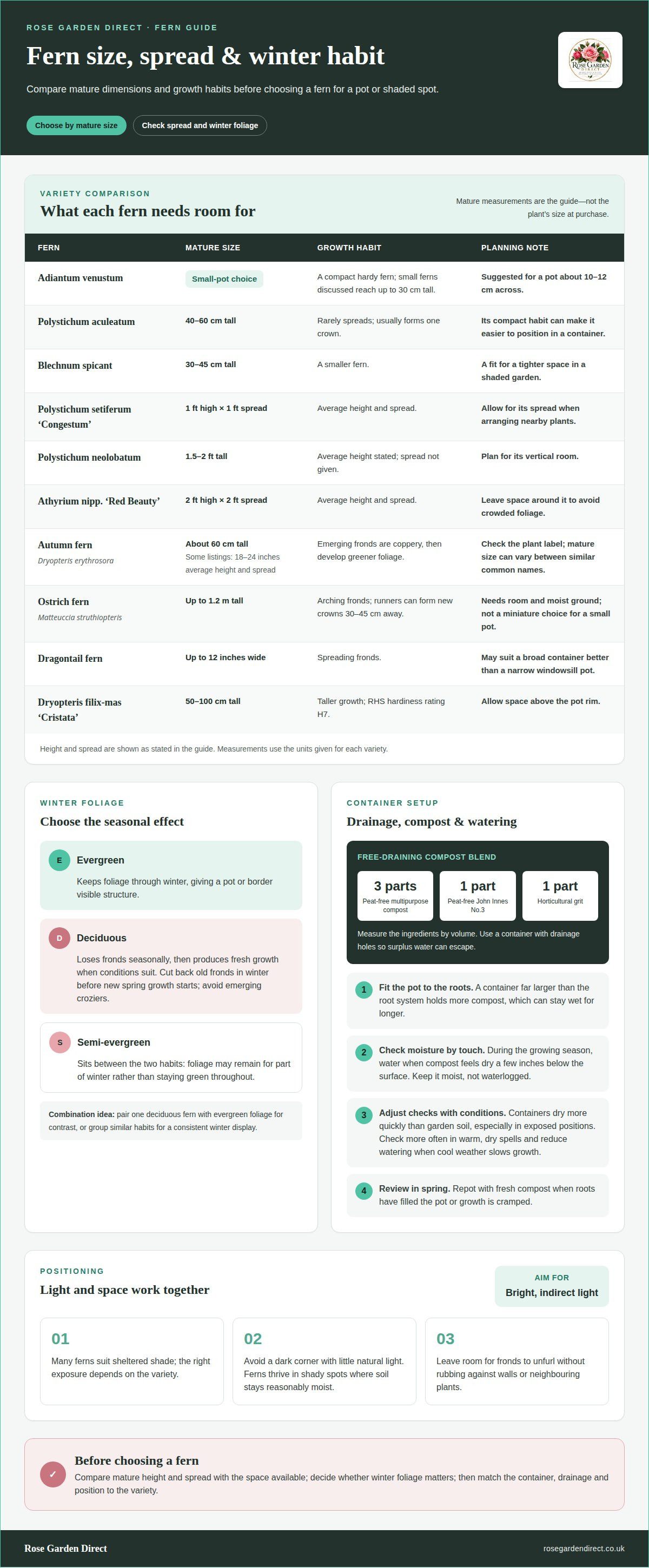
For small potted hardy ferns, check mature height, spread and winter foliage before choosing. Polystichum aculeatum reaches 40-60 cm tall, rarely spreads and usually forms one crown. That compact habit makes it easier to position in a container than a fern that travels underground. Polystichum polyblepharum grows to 80 cm, so allow more vertical room. Blechnum spicant is smaller, reaching 30-45 cm, and suits a tighter space in a shaded garden.
Compare each plant’s mature dimensions with the pot’s position, not just its size at purchase. Polystichum setiferum ‘Congestum’ averages 1 ft in height and spread. Polystichum neolobatum averages 1.5-2 ft tall, whilst Athyrium nipp. ‘Red Beauty’ averages 2 ft in both height and spread. These figures help you plan spacing around other plants and prevent foliage crowding the container. For a narrow spot, a single-crown fern can be simpler to manage.
Autumn fern, Dryopteris erythrosora, reaches about 60 cm tall; other listings give its average height and spread as 18-24 inches. Its emerging fronds bring coppery tones before developing greener foliage, adding seasonal colour beside established evergreen leaves. It is a useful choice if you want a change in foliage colour without relying on flowers. Check the plant label for the variety, since mature size can differ between ferns sold under similar common names.
Ostrich fern, Matteuccia struthiopteris, can reach 1.2 m, so it is not a miniature choice. Its arching fronds need room, and its runners can form new crowns 30-45 cm away. Give it moist ground and enough space, rather than placing it in a small pot beside compact plants. Individual plants and mix-and-match selections may be priced differently; compare pot size and variety as well as the total cost before choosing. Deciduous types also lose their fronds in winter, unlike an evergreen fern.
2. Growing ferns in containers
For a pot about 10-12 cm across, choose compact Adiantum venustum. It is suggested as the best fit among these small-pot choices. Use drainage holes so surplus water can escape. For compost, blend three parts peat-free multipurpose compost with one part peat-free John Innes No.3. Add one part horticultural grit by volume. This free-draining mix supports growing roots whilst retaining moisture for fern foliage.
Match the container to the fern’s mature size and rootball. A pot far larger than the root system holds more compost, which can stay wet for longer. Choose a stable container with room for roots to develop, then leave space around the fronds. In spring, check whether roots have filled the pot. Repot when growth is cramped, using fresh compost and a container with drainage holes.
Dragontail fern reaches up to 12 inches wide, so its spreading fronds need room. It may suit a broad container better than a narrow windowsill pot. For a compact display, select ferns whose mature spread fits the container and nearby plants. Ferns bring varied texture and bright green foliage to a pot, providing an attractive contrast to flowers. Place the container where fronds have space to unfurl without rubbing against walls or other plants.
Water container-grown ferns regularly during the growing season. Check the compost by touch, including a few inches below the surface, and water when it feels dry there. Ferns generally prefer moist compost, not waterlogged roots, so let excess water drain away. Containers dry more quickly than garden soil, particularly in exposed positions. Check them more often in warm, dry spells, and reduce watering when cool weather slows growth.
For a larger container display, consider the 7.5L hardy Dryopteris fern rather than a compact 10-12 cm pot choice. Its pot size makes it a different scale of purchase from a small fern. Choose the container to suit the plant’s eventual spread, then position it where the fronds have adequate space. This keeps the display balanced as the fern grows.
3. Evergreen and deciduous ferns
An evergreen fern keeps its foliage through winter, giving a pot or border visible structure when other plants die back. A deciduous fern loses its fronds seasonally, then produces fresh growth when conditions suit. Both are perennials that can live for several years, so choose based on the winter effect you want. Semi-evergreen types sit between these habits: their foliage may remain for part of winter rather than staying green throughout.
Polypodium cambricum ‘Cambricum’ offers a useful seasonal example. Its fronds emerge in July and August and remain attractive through spring. This timing brings fresh growth to a container late in the year, followed by foliage through winter. Its feathery outline can soften a hard pot edge beside more substantial plants. For a delicate look, group it with other shade-tolerant foliage without crowding the fronds.
Deciduous ferns need a different winter routine. Cut back their old fronds in winter, before new spring growth starts. Remove dead foliage carefully, avoiding any emerging croziers. This tidies the container and makes room for the next flush. Ferns reproduce through spores rather than flowers or seeds, so changing foliage is not a sign of flowering. Watch the crown as spring approaches, especially after removing old fronds.
Use mature height to check whether a fern suits its pot and position. Dryopteris filix-mas ‘Cristata’ reaches 50cm-100cm tall and has RHS hardiness rating H7. Its taller growth needs space above the rim, whilst compact choices suit a smaller display. For a native planting scheme, select a fern identified as native to your area, then match its mature height and seasonal habit to the container. Avoid assuming every fern stays green in winter.
Choose a fern's position with its mature size and seasonal habit in mind. Its seasonal habit and eventual height help guide placement alongside evergreen plants. Combine one deciduous fern with evergreen foliage for contrast, or group similar habits for a consistent winter display. The choice is practical: evergreen fronds provide cover, whilst deciduous forms offer a clear seasonal reset.
4. Light and shade for potted ferns
Most ferns suit shade, but a pot’s position still affects moisture and frond condition. The RHS describes ferns as thriving in shady spots where soil stays reasonably moist. Aim for bright, indirect light rather than a dark corner with little natural light. In a woodland-style garden, place containers beneath open tree cover or beside a north-facing wall. Check the spot through the season, as nearby trees can change the shade.
Protect delicate fronds from strong direct sun, especially when a pot stands against a warm wall. Sun can dry the compost and scorch exposed foliage, so move the container into brighter shade if leaves look crisp or faded. Dense shade can also limit healthy growth. Look for healthy green fronds and new growth that can unfurl. Adjust the position before changing your watering routine alone.
Moisture is the deciding factor in exposed spots. Wind and sun can dry a container faster than sheltered ground, even when the fern prefers shade. Check the compost below the surface and water when it feels dry. Keep drainage clear, as persistent waterlogging can damage roots. Adiantum aleuticum suits moist but well-drained soil at the foot of a north wall, making it a practical example for a shaded position. Shelter its fronds from drying conditions.
Use the fern’s shape to plan the display as well as its light needs. A pot with arching fronds needs room to spread without touching a hot wall or blocking a path. Group containers with similar moisture needs, then check each position as the season changes. For a shady garden, choose a hardy fern suited to the available light and keep its compost evenly moist. Explore hardy fern options for a container display that fits your space.
Rose Garden Direct: Black Baccara Bareroot Rose
Rose Garden Direct offers the Black Baccara Bareroot Rose and potted hardy fern options for different planting plans. If you want a fern rather than a rose, the Dryopteris Male Fern 5L Potted Big Trunk is a larger-pot option to consider after comparing compact varieties and container space. Its 5L pot distinguishes it from a small starter pot, so plan for the room its foliage will need as it grows.
Choose a potted Dryopteris when you want a hardy fern for a shaded container or garden display. For a rose instead, the Blue Moon Hybrid Tea Bareroot Rose and The Apricot Queen Elizabeth Bareroot Rose are also available. Match your choice to the planting space and the type of plant you want to grow.
Contact Rose Garden Direct to explore the available options.
Plan your next planting choice
Use your container as the starting point for a wider planting plan. Decide whether its role is to keep a shaded corner green through winter or add foliage beside other garden plants. Then choose the next plant to suit the space, light and look you want. This helps small potted hardy ferns feel part of a considered display rather than an isolated purchase.
For a potted fern, Rose Garden Direct offers the Dryopteris Male Fern 5L Potted Big Trunk. If you’re also planning a rose bed, its range includes the Black Baccara Bareroot Rose and Blue Moon Hybrid Tea Bareroot Rose. These are distinct choices for different parts of a garden, so select according to your planting plans.
Contact Rose Garden Direct to explore its plants and take the next step with confidence.
Frequently Asked Questions
Can ferns survive winter in pots?
Yes, hardy ferns can overwinter in UK pots if the container drains well and the variety suits the conditions. A pot is more exposed than garden soil, so roots face colder, wetter conditions. Place it in a sheltered spot during harsh weather and keep drainage holes clear. Avoid leaving the container standing in a saucer of water through winter.
Which hardy fern varieties stay small enough for pots in the UK?
Maidenhair spleenwort, listed at 10 cm tall, and common polypody, listed at 30 cm, are compact options. The congested soft shield fern is also listed at 30 cm. These small potted hardy ferns can suit containers where height is limited, but check the plant’s eventual spread too. A spreading habit may need more room than its height suggests.
What are the mature height and spread of compact hardy ferns?
Dimensions vary by variety. Asplenium scolopendrium ‘Angustifolium’ averages 1-2 ft in height and spread. Lady fern can reach 1-3 ft tall and 1-2½ ft wide, so it needs more space. Use mature measurements to judge whether a fern fits the pot’s position, and leave room for fronds to develop without pressing against neighbouring plants.
Which small hardy ferns are best for shade, partial shade or sun?
Shady or partly shaded positions suit most ferns better than exposed, sunny spots. The RHS describes ferns as thriving in shade with reasonably moist soil. Adiantum aleuticum suits moist, well-drained soil at the foot of a north wall. For a sunnier position, choose only a variety whose growing guidance supports it, and monitor the compost closely as sun and wind increase drying.
How often should potted hardy ferns be watered and fed?
Water according to the compost’s condition, rainfall and exposure rather than following a fixed calendar. Containers dry faster in warm, windy weather, so check them more often during those spells. Feed during active growth with a general-purpose plant feed, following its label directions. Avoid overfeeding: excess nutrients can encourage soft growth less suited to winter conditions.
Do small potted hardy ferns need winter protection in the UK?
Some protection helps, especially for pots in exposed positions. Move containers beside a sheltered wall, keep drainage unobstructed and group pots together to reduce exposure. During severe cold, wrap the pot to insulate the roots, while leaving foliage uncovered where practical. Evergreen fronds may look untidy after winter weather; remove damaged leaves without disturbing new growth at the crown.


